The right meat slicer can improve portion consistency, speed up sandwich and charcuterie prep, and reduce manual cutting during busy restaurant shifts. The models in this roundup cover common commercial sizes, power levels, blade materials, and thickness ranges.
Before choosing, consider your daily volume, the foods you slice most often, available counter space, and how easily staff can clean and operate the machine. The buying guide below highlights the practical differences that matter in a professional kitchen.
Best 10 Meat Slicer for Restaurant Picks for 2026
Best Heavy-Duty Pick
10-Inch KWS Commercial Meat Slicer
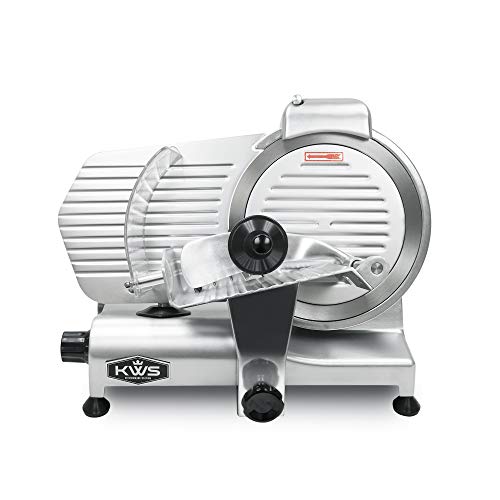
- 320W high-torque motor for repeated slicing
- NSF-certified blade with built-in sharpener
- Removable parts and ETL-listed safety
Best For: Small restaurants, delis, and bulk food prep
Best Quiet Value

- 240W motor with chromium-plated blade
- 0–13 mm thickness adjustment
- Detachable parts and low-noise operation
Best For: Small delis and quieter countertop prep
Best Large-Blade Pick
VEVOR 12-Inch Commercial Slicer

- 12-inch carbon steel blade
- 0–15 mm adjustable thickness
- 320W motor with built-in sharpening stone
Best For: Restaurants handling larger products and varied cuts
Best Low-Noise Design

- Thermal-protected 240W copper motor
- 0–12 mm thickness control
- 10-inch carbon steel blade with sharpener
Best For: Everyday restaurant or home deli prep
Powerful Adjustable Pick

- 340W motor with a 10-inch steel blade
- Adjustable 0–12 mm slice thickness
- Built-in sharpener and fixed ring guard
Best For: Caterers and chefs needing versatile, adjustable slicing
Corrosion-Resistant Classic
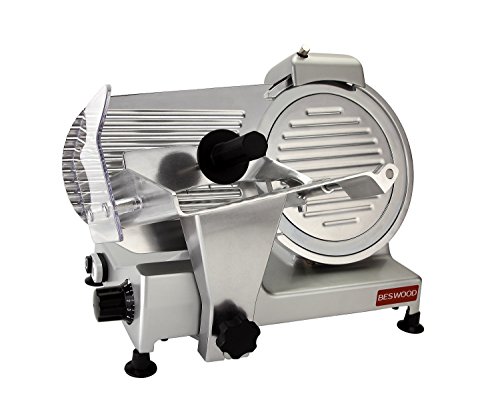
- Chromium-plated steel blade
- 24V protected illuminated switch
- ETL listed and certified
Best For: Commercial and home users focused on blade protection and certification
Lightweight Frozen-Food Option
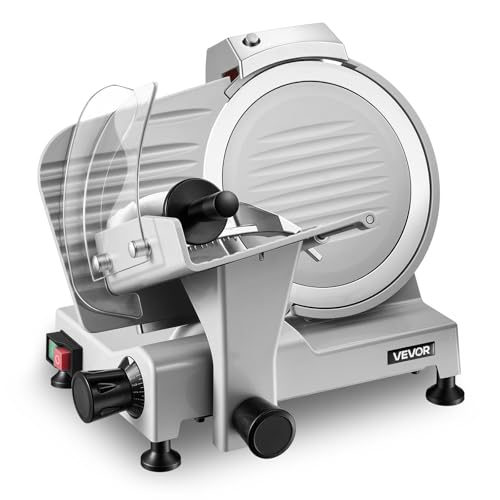
- 300W motor with 300–450 RPM operation
- 0–12 mm adjustable thickness
- Detachable parts and ETL approval
Best For: Food-service spaces needing lighter, easy-clean slicing equipment
Best Value Restaurant Slicer
ARINOO 10-Inch Commercial Meat Slicer

- 240W motor with up to 50 slices per minute
- 0.2–12mm adjustable thickness control
- Removable blade and built-in sharpener
Best For: Versatile restaurant and home food preparation
Best Simple Pick
VEVOR 10-Inch Commercial Meat Slicer
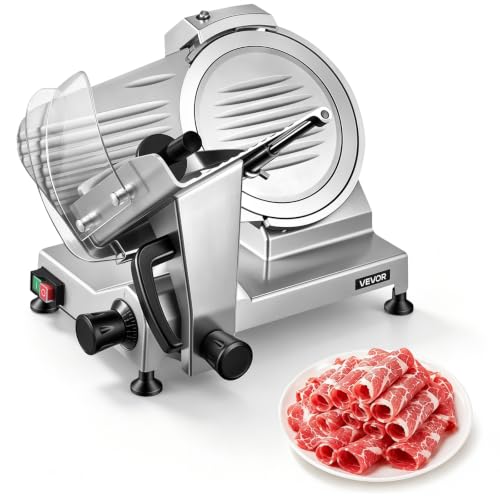
- 240W motor runs at 350–400 rpm
- 0–12mm thickness adjustment
- 34-pound body with non-slip feet
Best For: Frequent commercial slicing and stable countertop use
Best Premium Blade
BESWOOD 10-Inch Electric Deli Slicer

- Chromium-plated high-carbon steel blade
- Automatic operation for convenient slicing
- Removable serving plate and maintenance accessories
Best For: Kitchens prioritizing blade durability and automated operation
Best Heavy-Duty Pick – 10-Inch KWS Commercial Meat Slicer
For a meat slicer for restaurant prep, the KWS MS-10NS stands out with its 320W high-torque motor, NSF-certified 10-inch stainless steel blade, and construction intended for repeat use. Its adjustable dial supports slices from paper-thin to 14 mm, while the removable components simplify cleanup.
Best For: Small food-service operations, deli-style prep, game processing, and users who want a sturdy countertop slicer.
Pros:
- 320W belt-driven motor is designed for continuous slicing of meat, cheese, and semi-frozen foods.
- NSF-certified stainless steel blade includes a built-in dual-whetstone sharpener.
- Removable carriage, hand guard, blade, and blade cover support easier cleaning.
- ETL listed and supported by U.S.-based parts and service availability.
Cons:
- The optional bread-slicing attachment is sold separately.
- Its large tray and heavy-duty construction may take more counter space than compact slicers.
The KWS is a practical choice when durability, sanitation features, and steady batch performance matter more than the smallest footprint. Partially freezing meat to about -4°C can help produce especially thin slices.
Best Quiet Value – 10-Inch Semi-Auto Meat Slicer
This 10-inch model is a practical meat slicer for restaurant, deli, or home use when you want semi-automatic operation and straightforward maintenance. Its 240W motor, chromium-plated steel blade, and 0–13 mm thickness range cover frozen meat, cheese, bread, and everyday deli preparation.
Best For: Small delis, quieter countertop prep, and buyers who prioritize removable parts and simple operation.
Pros:
- 240W motor and 10-inch chromium-plated steel blade handle meat, cheese, bread, and frozen foods.
- Built-in sharpener helps maintain the blade without removing it.
- Detachable blade, shield, and carriage make cleaning more convenient.
- Non-slip feet, food pusher, and fixed transparent shield support safer operation.
Cons:
- At 30.8 pounds, it is substantial for a countertop appliance.
- The semi-automatic design still requires the operator to move the food carriage.
With its low-noise design and dishwasher-safe listed components, this slicer offers a balanced fit for smaller food-service environments that need consistent portions without an especially loud motor.
Best Large-Blade Pick – VEVOR 12-Inch Commercial Slicer
The VEVOR 12-inch model is a meat slicer for restaurant kitchens that need a larger cutting surface and flexible thickness control. Its 320W motor, 12-inch carbon steel blade, 350–400 RPM speed, and 0–15 mm adjustment range are suited to meat, cheese, frozen foods, and firm vegetables.
Best For: Restaurant prep involving larger products, thicker portions, and a broad range of slicing tasks.
Pros:
- 12-inch carbon steel blade provides a larger cutting capacity than the 10-inch models listed.
- Adjustable thickness from 0 to 15 mm supports thin and thick cuts.
- Built-in sharpening stone helps with routine blade maintenance.
- Food pusher, transparent baffle, safety guard ring, waterproof switch, and rubber feet add practical safety features.
Cons:
- At 46.3 pounds, it is the heaviest option in this group.
- Hand-wash-only care requires more hands-on cleanup.
- The larger 21.6-inch length and 12-inch blade need generous counter space.
This VEVOR is best viewed as a capacity-focused option rather than a compact slicer. Its larger blade and wide thickness range make it useful for demanding prep, provided the kitchen has room for its heavier aluminum-alloy body.
Best Low-Noise Design – 240W Copper-Motor Meat Slicer
For buyers seeking a meat slicer for restaurant or home use, this 10-inch model combines a 240W copper motor with thermal protection, a carbon steel blade, and adjustable 0–12 mm thickness control. Its low-noise design and aluminum-alloy body suit routine slicing of meat, cheese, deli foods, and vegetables.
Best For: Kitchens wanting stable motor performance, adjustable portions, and a relatively quiet slicer for everyday prep.
Pros:
- Copper-wire motor includes thermal protection for extended-use stability.
- 10-inch carbon steel blade rotates at a listed 300–450 RPM.
- 0–12 mm dial supports both thin deli slices and thicker cuts.
- Transparent safety guard and built-in sharpener add convenience during operation.
Cons:
- Hand-wash-only care requires manual cleaning.
- The 10-inch blade offers less capacity than the 12-inch VEVOR model.
This slicer is a sensible middle-ground option for regular restaurant or home prep. The thermal-protected motor and low-noise positioning are useful for repeated sessions, while the thickness dial handles common portioning needs.
Powerful Adjustable Pick – 340W Commercial Meat Slicer
For buyers comparing a meat slicer for restaurant or catering use, this semi-automatic model offers a 340W motor, a 10-inch chromium-plated steel blade, and adjustable thickness from 0 to 12 mm. Its die-cast aluminum body and built-in sharpener make it suited to recurring slicing tasks.
Best For: Caterers, chefs, and home users who need adjustable slicing for deli meats, cheese, bread, vegetables, and sausages.
Pros:
- Powerful 340W motor supports consistent slicing.
- Die-cast aluminum construction is durable, rustproof, and easy to clean.
- 0–12 mm thickness adjustment accommodates different foods.
- Built-in sharpener and fixed ring guard support maintenance and safer operation.
Cons:
- At 35 pounds, it is relatively heavy to move.
- Hand-wash-only care requires extra cleanup time.
- Semi-automatic operation still requires hands-on feeding.
This is a substantial option for users prioritizing motor power, a durable metal body, and broad thickness control. Its weight and hand-wash-only care are worth considering for smaller prep areas.
Corrosion-Resistant Classic – BESWOOD 10-Inch Deli Slicer
For a meat slicer for restaurant and home applications, the BESWOOD250 combines a 240W motor with a premium chromium-plated steel blade. Its semi-automatic design is intended for precise slicing of meat, cheese, vegetables, ham, and fruit.
Best For: Commercial and home users who value a corrosion-resistant blade, certified electrical protection, and precise food slicing.
Pros:
- Chromium-plated steel blade is designed for corrosion protection.
- Double illuminated ON/OFF switch uses 24V protection to help reduce power shock risk.
- Suitable for meat, cheese, vegetables, ham, and fruit.
- ETL listed and certified.
Cons:
- The supplied specifications do not list an adjustable thickness range.
- At 33 pounds, it may be cumbersome to reposition.
- Hand-wash-only care requires manual cleaning.
The BESWOOD250 is a sensible fit when blade corrosion protection and electrical certification are priorities. Buyers who need a clearly specified thickness range may prefer a model with an adjustment range listed in its specifications.
Lightweight Frozen-Food Option – VEVOR 10-Inch Slicer
For restaurant buyers seeking a meat slicer for restaurant prep, this VEVOR model pairs a 300W motor with 0–12 mm thickness control and a 10-inch carbon steel blade. It is designed for frozen meat, ham, steak, baguettes, cooked foods, produce, and other firm ingredients.
Best For: Restaurants, butcher shops, cafeterias, and home kitchens that want a lighter slicer with detachable components for cleaning.
Pros:
- 300W motor reaches 300–450 RPM for fast slicing.
- 0–12 mm adjustment supports thin deli slices and thicker portions.
- Plastic exterior is lighter than aluminum alloy and has no rust concerns.
- Detachable blade, food holder, and pusher simplify thorough cleaning.
Cons:
- The plastic body may feel less substantial than a metal construction.
- No manufacturer warranty is listed in the supplied details.
- Hand-wash-only care is required.
This model stands out for its relatively low 24.9-pound weight, cleaning-oriented detachable parts, and ETL approval. It is a practical choice for varied slicing duties, especially where easier repositioning matters.
Best Value Restaurant Slicer – ARINOO 10-Inch Commercial Meat Slicer
For a meat slicer for restaurant prep, the ARINOO combines a 240W all-copper motor with a 10-inch carbon-steel blade and semi-automatic operation. Its adjustable 0.2–12mm thickness range suits deli meats, frozen meat, bread, cheese, and produce, while the removable blade and safety guard simplify cleanup.
Best For: Restaurants and home users wanting versatile slicing, adjustable thickness, and a compact aluminum-bodied machine.
Pros:
- 240W motor is rated for up to 50 slices per minute.
- Adjustable 0.2–12mm thickness supports precise portioning.
- Removable blade, safety guard, and built-in sharpener aid maintenance.
- Includes non-slip feet, a food pusher, and a one-year warranty.
Cons:
- Hand washing is required according to the care instructions.
- Semi-automatic operation requires the operator to guide the food.
- Its 10-inch blade may be less suitable for unusually large cuts.
The ARINOO is a practical all-purpose option when a restaurant needs controlled slice thickness and straightforward cleaning without moving to a larger commercial machine.
Best Simple Pick – VEVOR 10-Inch Commercial Meat Slicer
The VEVOR is a substantial meat slicer for restaurant kitchens that need fast, repeatable slicing. Its 240W motor runs at 350–400 rpm, and the 10-inch carbon-steel blade adjusts from 0 to 12mm for frozen, raw, or cooked meats and ham.
Best For: Commercial or home users who prioritize a stable, heavier machine with fast slicing and removable food-contact components.
Pros:
- 45# carbon-steel blade provides a wide cutting surface.
- Built-in sharpening stone helps maintain blade sharpness.
- Thickness knob adjusts from 0 to 0.47 inches (0–12mm).
- Removable blade, food holder, and pusher support thorough cleaning.
Cons:
- At 34 pounds and 18 by 14 by 15 inches, it requires substantial counter space.
- Hand washing is specified for product care.
- Semi-automatic operation still requires manual food handling.
With its heavier build, stable non-slip feet, and raised-spike food pusher, the VEVOR is well suited to users who want a more substantial countertop slicer for recurring prep work.
Best Premium Blade – BESWOOD 10-Inch Electric Deli Slicer
The BESWOOD offers a polished option for a meat slicer for restaurant service, with a 10-inch chromium-plated high-carbon steel blade and automatic operation. It is designed for precise slicing of meat, cheese, bread, vegetables, and fruit, and includes a removable serving plate for easier cleanup.
Best For: Commercial and home kitchens seeking a corrosion-resistant blade, automatic operation, and included serving accessories.
Pros:
- Chromium-plated blade is designed to resist corrosion and reduce frequent sharpening.
- Automatic operation supports convenient slicing.
- Removable serving plate makes cleaning more convenient.
- Includes a cleaning brush, food-machine oil, seal ring oil, and serving plate.
Cons:
- The supplied notes do not specify an adjustable thickness range.
- At 33 pounds and 20 by 17 by 14.75 inches, it needs dedicated counter space.
- Hand washing is required according to the care instructions.
The BESWOOD stands out for its chromium-plated blade and included maintenance accessories, making it a strong fit when durability and a more automated workflow matter more than compact size.
How We Picked the Best Meat Slicer for Restaurant Use
We compared these 10 slicers by the specifications most relevant to restaurant prep: blade diameter, motor power, thickness adjustment, construction, stated speed, food compatibility, and operating format. We also considered whether each design appears better suited to light-duty counter service, regular deli production, or higher-volume use.
Specifications such as wattage and blade material are useful starting points, but they do not replace checking the manufacturer’s cleaning instructions, duty-cycle guidance, warranty, and local electrical requirements. A slicer should be evaluated as part of your full workflow, including storage, sanitation, and staff training.
Quick Comparison
| What to compare | Why it matters | Typical options in this roundup |
|---|---|---|
| Blade size | Determines the approximate size of foods the carriage can handle | 10-inch and 12-inch models |
| Motor power | Can support smoother operation through repeated slicing | 240W, 300W, 320W, and 340W |
| Thickness range | Controls sandwich, deli, cheese, and charcuterie portions | About 0–12 mm or 0–0.47 inch |
| Blade material | Affects edge durability, corrosion resistance, and maintenance | Carbon steel and chromium-plated steel |
| Operation | Influences workflow speed and staff control | Semi-automatic and standard electric designs |
Key Buying Factors for a Meat Slicer for Restaurant Operations
Blade Size and Food Capacity
A 10-inch blade is a practical fit for many sandwich shops, cafés, and smaller delis. A 12-inch model may be preferable when staff regularly slice larger roasts, hams, or high volumes of product, but it generally requires more counter space and careful handling.
Thickness Adjustment
Look for a clearly marked adjustment dial with the range your menu requires. Fine control is important for shaved meats, while a broader setting is useful for steaks, roast beef, cheese, and thicker sandwich portions. Confirm that the adjustment mechanism locks securely during use.
Motor and Workload
Higher wattage can be helpful for repeated prep, but it is not the only measure of performance. Match the slicer to the manufacturer’s intended duty cycle, and avoid treating a compact countertop model as a continuous-production machine unless it is specifically rated for that use.
Cleaning and Safety
Choose a design that lets staff safely access the blade, carriage, food pusher, and drip areas. A removable or easy-to-clean component layout can reduce sanitation time. Always use the blade guard and food pusher as directed, unplug the unit before cleaning, and follow applicable commercial food-safety procedures.
Who Should Buy Which Meat Slicer for Restaurant?
Small cafés and sandwich shops: A 10-inch, 240W slicer with straightforward thickness control is often the most practical balance of footprint, price, and capability.
Busy delis and catering kitchens: Consider a model with a larger blade or higher stated wattage if your staff slices several batches throughout the day. Prioritize stability, cooling, and the manufacturer’s duty-cycle guidance.
Restaurants serving varied meats and cheese: Choose precise adjustment, a durable plated or carbon-steel blade, and a carriage that accommodates your largest regular product.
Occasional or home-commercial users: A compact semi-automatic model may be sufficient, provided it can handle the intended foods and will be cleaned thoroughly after every use.
Before ordering, verify dimensions, shipping weight, voltage, warranty coverage, replacement-blade availability, and whether frozen food is explicitly supported. The best Meat Slicer for Restaurant service is the one that matches your volume and menu without creating unnecessary cleaning, safety, or storage problems.