Smart plugs without a hub make it easy to automate lamps, fans, coffee makers, and other compatible devices using your existing Wi-Fi network. The best models combine reliable app control with convenient scheduling and support for the voice assistant or smart-home platform you already use.
We compared 10 popular options across compatibility, setup, outlet design, electrical ratings, and value to help you choose the right plug for a simple single-device upgrade or a larger connected home.
Best 10 Smart Plugs Without a Hub Picks for 2026
Alexa Simplicity
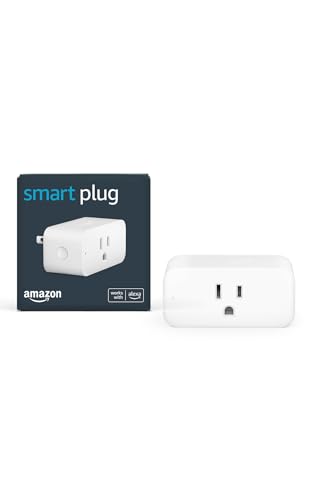
- No hub required for Alexa setup
- Schedules, timers, and routines
- Compact design preserves the second outlet
Best For: Alexa users automating lamps, fans, and appliances
Multi-Room Alexa Pick
Amazon Basics Smart Plug 4-Pack

- Four compact plugs for multiple rooms
- No hub or third-party app required
- Remote control and customizable Alexa routines
Best For: Alexa households automating several indoor appliances
Best Bluetooth/Wi-Fi Flexibility

- Bluetooth or 2.4GHz Wi-Fi connectivity
- Alexa and Google Assistant compatible
- Scheduling and group control
Best For: Multi-room smart-home setups needing flexible connectivity
Best Matter Compatibility

- Matter works with major smart-home platforms
- 15A/1800W maximum capacity
- Compact UL-certified design
Best For: Multi-platform homes using Apple Home, Alexa, Google, or SmartThings
Alexa Simplicity – Amazon Smart Plug
If you want smart plugs without a hub, the Amazon Smart Plug is a straightforward choice for homes already using Alexa. It connects through the Alexa app, supports voice control, and works with many devices that have a physical on/off switch.
Best For: Alexa households that want simple setup and dependable control for lamps, fans, coffee makers, and similar appliances.
Pros:
- No separate smart home hub is required.
- Supports Alexa voice control, schedules, timers, and routines.
- Compact design leaves the second outlet available.
- Automatically reconnects to Alexa after power or Wi-Fi outages.
Cons:
- Its listed compatibility centers on Alexa rather than multiple voice platforms.
- Connected appliances need a physical on/off switch to work as intended.
This is a practical pick for Alexa users who value an uncomplicated setup and everyday automation. It is less compelling if you need broad ecosystem compatibility beyond Alexa.
Cross-Platform Value – Kasa Smart Plug Ultra Mini EP10
Among smart plugs without a hub, the Kasa EP10 stands out for supporting both Amazon Alexa and Google Assistant. It uses 2.4GHz Wi-Fi and adds app-based remote control, scheduling, and countdown timers for everyday electronics.
Best For: Households that want flexible Alexa or Google Assistant control, remote access, and a compact 15A plug.
Pros:
- No hub is required, and it works with Alexa and Google Assistant.
- Control devices remotely through the Kasa app.
- Supports schedules and countdown timers.
- Compact design and UL certification; includes a 2-year warranty.
Cons:
- Requires a 2.4GHz Wi-Fi connection.
- It is a single-pack purchase.
The EP10 is a well-rounded option when platform flexibility matters. Its 2.4GHz-only requirement is worth checking before buying, but the app control, automation features, and warranty add practical value.
Multi-Room Alexa Pick – Amazon Basics Smart Plug 4-Pack
For outfitting several rooms with smart plugs without a hub, this Amazon Basics four-pack offers Alexa-focused control in a compact format. Setup and management happen through the Alexa app, with remote operation, schedules, and customizable routines.
Best For: Alexa users who need multiple plugs for lamps, fans, holiday lighting, coffee makers, or other compatible indoor appliances.
Pros:
- Four plugs make it convenient to automate multiple appliances.
- No hub or third-party app is required.
- Supports remote control, schedules, sunrise and sunset routines, and voice commands.
- Compact design leaves other sockets available.
Cons:
- Works with Alexa only.
- Uses 2.4GHz Wi-Fi.
- Designed for indoor use with compatible plug-in appliances.
This pack makes sense when you are building out an Alexa-based setup rather than buying a single replacement plug. Its main tradeoff is the lack of Google Assistant or broader platform support.
Matter-Ready Choice – Enbrighten Matter Indoor Smart Plug
The Enbrighten Matter Indoor Smart Plug is a useful option for shoppers seeking smart plugs without a hub and wanting Matter compatibility. It connects over 2.4GHz Wi-Fi to the Enbrighten app or a Matter-certified controller and supports Alexa and Google Assistant voice commands.
Best For: Homes that want a grounded indoor plug with Matter support, app control, schedules, and automation options.
Pros:
- No hub is required for Alexa and Google Assistant voice commands.
- Matter compatibility works with the Enbrighten app or a Matter-certified controller.
- Grounded outlet supports three-prong devices such as lamps, fans, and humidifiers.
- Offers schedules and automations based on time, location, weather, and other factors.
Cons:
- Requires a 2.4GHz Wi-Fi network.
- It has one outlet and is intended for indoor use.
- A Matter-certified controller may be needed for Matter-based setup.
This is the strongest fit for shoppers planning around Matter or needing a grounded outlet. Its 5-year limited warranty is another helpful consideration, though the single-outlet indoor design limits its use cases.
Best Value Pair – Kasa HS103P2
The Kasa HS103P2 is a practical two-pack for anyone seeking smart plugs without a hub. It connects over 2.4GHz Wi-Fi and supports app, voice, timer, and countdown control for lamps, fans, humidifiers, and similar household electronics.
Best For: Households that want two compact, voice-compatible plugs at once.
Pros:
- Two plugs are included in the package.
- Works with Amazon Alexa and Google Assistant for voice control.
- Kasa app supports remote control, schedules, and countdown timers.
- UL certified and rated for up to 15 amps resistive load.
Cons:
- Requires a 2.4GHz Wi-Fi connection.
- It does not offer the listed Matter compatibility of some newer alternatives.
The HS103P2 is a straightforward option when you need basic scheduling and remote access across two outlets. Its 2.4GHz requirement is worth checking before purchase, but the simple setup and broad voice-assistant support make it easy to recommend for everyday devices.
Best for Matter-Compatible Homes – Leviton Decora D215P-1RW
The Leviton Decora D215P-1RW is a flexible choice among smart plugs without a hub, with Wi-Fi and Matter connectivity plus support for Alexa, Google Assistant, Apple Home/Siri, SmartThings, and Sonos. It plugs into a standard 120V outlet and adds remote on/off control for lamps, electronics, and small appliances.
Best For: Smart-home users who want broad platform support and Matter compatibility.
Pros:
- Works without a hub and supports Matter over Wi-Fi.
- Compatible with Alexa, Google Assistant, Apple Home, SmartThings, and Sonos.
- My Leviton supports remote control, schedules, sunrise/sunset settings, and scenes.
- Supports several loads, including up to 15A general use and 1500W incandescent or halogen loads.
Cons:
- Requires a 2.4GHz Wi-Fi connection.
- Only one smart plug is included.
- Its listed load limits vary by device type, so compatibility should be checked carefully.
This Leviton model stands out for ecosystem flexibility rather than bundle value. If you are building a mixed-platform setup or specifically want Matter support, its wide compatibility and scene controls make it a strong fit.
Best Dual-Outlet Design – HBN U153T
The HBN U153T combines two grounded outlets in one device, making it useful for shoppers comparing smart plugs without a hub when outlet space is limited. Each outlet can be controlled independently or together through the HBN Smart app, with voice control, timers, and schedules available over 2.4GHz Wi-Fi.
Best For: Users who want two independently controlled outlets in one plug-in unit.
Pros:
- Dual outlets can be operated individually or together.
- Supports Alexa and Google Home voice control.
- App-based remote control, timers, and schedules are included.
- Rated up to 15A and 1875W, with ETL certification.
Cons:
- Works with 2.4GHz Wi-Fi only.
- It is a single unit rather than a two-pack of separate plugs.
- The design may occupy more wall space than a compact single-outlet plug.
The U153T is especially convenient when two nearby appliances need smart control but you want to preserve another wall outlet. Its independent dual-socket control provides more flexibility than a standard single-outlet plug, while the 15A rating covers many everyday household devices.
Best Bluetooth/Wi-Fi Flexibility – Govee Smart Plug 4-Pack
If you want smart plugs without a hub, the Govee Smart Plug 4-Pack offers app, voice, scheduling, and group control through a Bluetooth or 2.4GHz Wi-Fi connection. Its four-pack is practical for spreading automation across several rooms.
Best For: Households that want multiple plugs with flexible connectivity and Alexa or Google Assistant control.
Pros:
- Supports Bluetooth or 2.4GHz Wi-Fi connections.
- Works with Amazon Alexa and Google Assistant for voice control.
- Offers schedules, timers, and group control in the Govee Home app.
- ETL and FCC certified, with a compact design.
Cons:
- Does not support 5GHz Wi-Fi.
- Rated for 10A and 1200W, which is lower than some 15A models.
Choose this set if connection flexibility and multi-room coverage matter more than maximum electrical capacity. The 2.4GHz-only Wi-Fi requirement is worth checking before purchase.
Best Matter Compatibility – TP-Link Tapo P125M 3-Pack
For shoppers seeking smart plugs without a hub, the TP-Link Tapo P125M combines Matter support with app and voice control. Its compact form, 15A rating, and broad platform compatibility make it a versatile choice for newer smart homes.
Best For: Users who want one smart plug platform that works with Apple Home, Alexa, Google Home, and Samsung SmartThings.
Pros:
- Matter support works across several certified smart-home platforms.
- Supports local network control between Matter devices when configured.
- 15A/1800W capacity suits a wide range of household electronics.
- Compact, UL-certified flame-retardant design with a two-year warranty.
Cons:
- Requires a 2.4GHz Wi-Fi network.
- Matter features depend on compatible smart-home devices and platforms.
This is the strongest fit for shoppers prioritizing interoperability and future flexibility. Bluetooth onboarding can simplify setup, while scheduling and voice controls cover everyday automation.
Best High-Power Value Pack – EIGHTREE Smart Plug 4-Pack
The EIGHTREE four-pack delivers smart plugs without a hub for homes that need several remotely controlled outlets. With 15A/1800W support, Smart Life automation, and compatibility with Alexa, Google Home, and SmartThings, it covers common scheduling and voice-control tasks.
Best For: Buyers who need four compact plugs for higher-power appliances and everyday routines.
Pros:
- 15A/1800W rating is designed for devices such as coffee makers, air fryers, and heaters.
- Supports remote app control, timers, schedules, and group control.
- Works with Alexa, Google Home, and SmartThings through the Smart Life app.
- Compact 1.2-inch-thick design fits behind furniture and in crowded outlets.
Cons:
- Works with 2.4GHz Wi-Fi only.
- Alexa, Google Home, and SmartThings integration requires linking through Smart Life.
Consider this pack when quantity, power capacity, and straightforward automation are the priorities. Its Smart Life dependency adds an extra integration step, but the four-plug bundle can simplify control across a room or home.
How We Picked the Best Smart Plugs Without a Hub
We focused on plugs that connect directly to a home Wi-Fi network and do not require a separate proprietary hub for basic operation. Our comparison considered supported ecosystems, Matter compatibility, rated load, app features, physical size, outlet configuration, and pack value.
We also looked for practical features such as schedules, timers, remote control, voice commands, compact designs, and clear indoor-use limitations. A smart plug should be straightforward to install and dependable for everyday low- to moderate-power devices.
Quick Comparison
| Best For | Recommended Type | What to Look For |
|---|---|---|
| Alexa households | Alexa-focused Wi-Fi plug | Simple setup and reliable voice control |
| Mixed smart-home platforms | Matter-compatible plug | Support for Alexa, Google Home, Apple Home, or SmartThings |
| Several devices | Two-, four-, or multi-pack | Lower per-plug cost and consistent app management |
| Small spaces | Mini smart plug | Compact housing that leaves adjacent outlets usable |
| Higher-load appliances | 15-amp rated model | Suitable electrical rating and grounded outlet design |
Key Buying Factors for Smart Plugs Without a Hub
Wi-Fi and Platform Compatibility
Most models use 2.4GHz Wi-Fi, which generally offers better range through walls than 5GHz but may require selecting the correct network during setup. Confirm that the plug works with your preferred platform. Matter models can be especially useful if you use more than one ecosystem, but features may vary by platform.
Electrical Rating and Intended Use
A 15-amp rating is common for these products, but it does not make every plug suitable for every appliance. Check the device label and the plug’s specifications before connecting heaters, air conditioners, pumps, or other high-draw equipment. Many smart plugs are intended for indoor use only and should not be used in damp locations.
Size and Outlet Access
Compact mini designs are useful behind furniture or in crowded wall outlets. Larger plugs may block the neighboring receptacle, while dual-outlet models can offer more flexibility. Note that a smart plug does not automatically turn one outlet into a safely managed high-power power strip.
Automation and Privacy Features
Look for schedules, countdown timers, away modes, energy monitoring, and local-control options if those features matter to you. App accounts and cloud connectivity may be required, so review permissions and privacy settings before completing setup.
Who Should Buy Which Smart Plugs Without a Hub?
Choose an Alexa-focused model if you want the quickest path to voice control with Echo devices. Choose a Matter-compatible plug if flexibility across Apple Home, Alexa, Google Home, or other supported platforms is your priority. Choose a compact mini plug for lamps and small electronics in tight spaces.
Buy a multipack when automating several rooms; it usually offers better value and keeps devices in one app. If you need two independently controlled outlets, consider a dual-socket design, but verify its total load rating. For basic lamps, fans, and chargers, nearly any well-reviewed 15-amp indoor model in this roundup can provide convenient scheduling and remote control without adding a hub.