Choosing the right smoke detector can be critical for people who are deaf, hard of hearing, or difficult to wake. The best options combine loud alarms with bright LED strobes, bed-shaker compatibility, interconnected alerts, or whole-home notification systems.
This roundup compares 10 smoke detectors for hearing-impaired households, covering battery-powered, hardwired, combination smoke-and-CO, and supplemental alerting solutions.
Best 10 Smoke Detectors for Hearing Impaired Picks for 2026
Top Visual Alert Pick
Kidde Smoke & CO Strobe Detector

- Smoke and CO detection in one alarm
- Bright strobe with separate flash patterns
- Hardwired with 10-year battery backup
Best For: Homes needing hardwired visual and audible alerts
Best Whole-Home Value

- Six wireless alarms for broad coverage
- All linked alarms sound together
- Sealed batteries last up to 10 years
Best For: Multi-room smoke-only protection on a budget
Best Synchronized Strobe

- Smoke and CO alarm with integrated strobe
- Separate flash patterns identify hazards
- Strobes synchronize across multiple units
Best For: Hardwired visual alerts for hearing-impaired residents
Best Voice Alert Option
Kidde Battery Smoke & CO 3-Pack

- Voice messages identify fire or CO
- Smoke and CO detection in every unit
- Battery-powered three-pack installs easily
Best For: Homes wanting spoken hazard alerts without hardwiring
Visual Strobe Alert
First Alert SLED177 LED Strobe

- 177-candela LED visual warning
- Synchronized flashing for multiple units
- 120V hardwired ceiling or wall mount
Best For: Dedicated visual alerting for hearing-impaired residents
Low-Maintenance Alarm
X-Sense SD2J0AX 10-Year Smoke Alarm

- Sealed 10-year lithium battery
- Photoelectric sensing for fewer nuisance alarms
- Standalone, no-wire installation
Best For: Basic smoke detection paired with an accessibility alert system
Complete Accessibility Alerts

- Strobe, bed shaker, audio, and scrolling text
- Listens to existing smoke and CO alarms
- Rechargeable backup for power outages
Best For: Multi-sensory alerts for deaf, hard-of-hearing, and heavy sleepers
Integrated Strobe Coverage

- 177-candela LED visual strobe
- 10-year sealed battery backup
- Compatible units can flash in unison
Best For: Hardwired homes needing a strong integrated visual alert
Fast Visual Alerts
Kidde Smoke Detector with Strobe

- High-intensity LED strobe flashes three times
- 10-year battery backup
- Interconnects with compatible Kidde alarms
Best For: Residential users wanting synchronized visual and audible alerts
Nuisance-Alarm Control
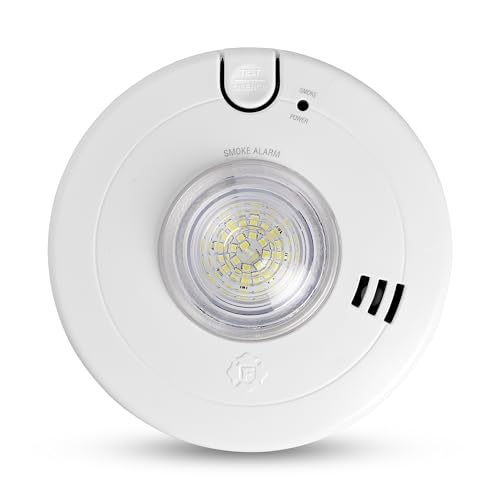
- Integrated LED visual strobe
- 10-year battery backup
- Precision Detection reduces cooking nuisance alarms
Best For: Compatible First Alert or BRK hardwired systems
Top Visual Alert Pick – Kidde Smoke & CO Strobe Detector
For shoppers seeking smoke detectors for hearing impaired residents, this Kidde combination alarm pairs smoke and carbon monoxide detection with a bright LED strobe. Its hardwired design, 10-year battery backup, and interconnect capability make it a strong choice for whole-home visual alerts.
Best For: Homes needing hardwired smoke and CO detection with synchronized strobe warnings.
Pros:
- High-intensity strobe uses distinct flash patterns for smoke and CO.
- Hardwired power includes a built-in 10-year lithium battery backup.
- Compatible Kidde alarms can interconnect so strobes flash together.
- Includes an 85-decibel audible alarm and meets listed UL and ETL standards.
Cons:
- Hardwired installation may require more work than battery-powered models.
- Sold as a single detector.
This is the most purpose-built option here for hearing loss because visual and audible alerts work together. Choose it when permanent installation and coordinated room-to-room signaling are priorities.
Best Whole-Home Value – X-Sense Interconnected 6-Pack
This six-pack is a practical way to outfit multiple rooms with smoke detectors for hearing impaired households that benefit from alarms sounding together. The wireless Link+ system can connect compatible units across bedrooms, hallways, and multiple floors.
Best For: Multi-room homes wanting expandable, interconnected smoke-only coverage.
Pros:
- All connected alarms sound when one detects smoke.
- Sealed lithium batteries provide up to 10 years of power.
- Photoelectric sensing is designed to reduce nuisance alarms from cooking fumes and steam.
- Supports up to 18 compatible X-Sense Link+ alarms.
Cons:
- Provides an audible alarm only, without a built-in visual strobe.
- Does not include carbon monoxide detection.
- Wireless connectivity is limited to compatible X-Sense alarms.
Although it lacks a visual alert, synchronized alarms can improve audibility throughout a home. It is best suited to shoppers prioritizing broad smoke coverage and simple, battery-powered installation.
Best Synchronized Strobe – First Alert BRK 7030BSL
First Alert BRK 7030BSL Hardwired Hearing Impaired Combination Alarm with Led Strobe Light, White
Check Price On AmazonThe First Alert BRK 7030BSL is designed specifically for hearing-impaired residents, combining smoke and carbon monoxide detection with a 77-candela LED strobe. When installed with multiple compatible units, its strobes flash in unison for coordinated visual warnings.
Best For: Hardwired installations requiring synchronized visual smoke and CO alerts.
Pros:
- Integrated smoke, carbon monoxide alarm, and strobe simplify installation.
- Separate flash patterns distinguish smoke from carbon monoxide.
- 77-candela strobe is intended to help awaken hearing-impaired residents.
- Optipath 360 technology provides direct access to the smoke-sensing chamber.
Cons:
- Hardwired installation may be less convenient than battery-powered models.
- Sold as a single alarm.
- Supplied notes identify a 10-year warranty but do not specify a battery-backup detail.
This model is a focused choice for buyers who want visual alerts rather than an audible-only detector. Its synchronized strobe feature is particularly useful when multiple units are installed.
Best Voice Alert Option – Kidde Battery Smoke & CO 3-Pack
For a straightforward battery-powered option among smoke detectors for hearing impaired households, this Kidde three-pack combines smoke and CO detection with an 85-decibel alarm, red LED status light, and voice messages. The spoken alerts identify whether the danger is fire or carbon monoxide.
Best For: Homes and apartments wanting easy-to-install smoke and CO alarms with voice hazard identification.
Pros:
- Voice alerts announce “Fire” or “Warning, Carbon Monoxide.”
- Detects both smoke and carbon monoxide in each alarm.
- Uses two included AA alkaline batteries per unit.
- Three-pack supports coverage in multiple areas of the home.
Cons:
- It has an audible alarm and LED light, but no dedicated strobe.
- Battery replacement is required rather than using a sealed 10-year battery.
- Supplied notes do not list an interconnect feature.
This is a convenient choice when voice information and simple installation matter more than a dedicated visual strobe. It offers useful hazard identification, but shoppers needing strong visual alerts should consider one of the strobe-equipped models.
Visual Strobe Alert – First Alert SLED177 LED Strobe
The First Alert SLED177 is a hardwired visual alert designed for smoke detectors for hearing impaired applications. Its powerful 177-candela LED strobe provides a prominent warning without relying on sound, while synchronized flashing helps coordinate multiple installed units.
Best For: Hearing-impaired residents who need a dedicated, ceiling- or wall-mounted visual alert connected to a compatible alarm system.
Pros:
- Powerful 177-candela LED strobe provides a clear visual warning.
- Multiple units can flash in unison through synchronized operation.
- Low-profile design supports ceiling or wall mounting.
- 120V hardwired quick-connect wiring simplifies installation.
Cons:
- Requires hardwired 120V installation.
- It is an alerting strobe rather than a standalone smoke detector.
- No warranty is listed in the supplied product details.
This is a focused accessibility component for homes or facilities that already use a compatible hardwired alarm setup. Choose it when a bright, synchronized visual signal matters more than battery-powered portability.
Low-Maintenance Alarm – X-Sense SD2J0AX 10-Year Smoke Alarm
The X-Sense SD2J0AX is a standalone option among smoke detectors for hearing impaired households, but its primary notification is audible. Its sealed 10-year lithium battery reduces maintenance, while photoelectric sensing is designed to help limit nuisance alarms from everyday cooking fumes and steam.
Best For: Buyers seeking an easy-to-install, long-life smoke alarm to use alongside a separate visual, vibrating, or other accessibility alert system.
Pros:
- Sealed lithium battery provides up to 10 years of operation.
- Photoelectric sensing may reduce cooking-related nuisance alarms.
- ETL listed to meet the UL 217 safety standard.
- Battery-powered installation requires no wiring or electrician.
Cons:
- Uses an audible alarm and LED indicator, not a dedicated strobe or bed shaker.
- Standalone model does not wirelessly interconnect with other alarms.
- It does not provide app alerts or a base-station connection.
The SD2J0AX is a practical core smoke alarm, especially where simple installation and minimal battery upkeep are priorities. For deaf or hard-of-hearing users, pair it with an appropriate accessory alerting system rather than relying on this alarm alone.
Complete Accessibility Alerts – HomeAware II Starter Kit
The Sonic Alert HomeAware II Basic Starter Kit expands smoke detectors for hearing impaired setups by listening for the sound patterns from an existing smoke or CO alarm. It then provides bright strobe flashes, a bed shaker, loud tones, and scrolling text, offering several ways to recognize an alert.
Best For: Deaf or hard-of-hearing users, people who sleep without hearing aids, and heavy sleepers who need visual, vibration, and text-based notifications.
Pros:
- Combines strobe, bed-shaker, audio, and scrolling text alerts.
- Works with existing smoke and CO alarms by detecting their sound patterns.
- Rechargeable battery backup can help during power outages.
- Bluetooth app connectivity supports cellphone calls and text notifications.
Cons:
- It does not detect smoke or carbon monoxide directly.
- Must be placed in the same room as the existing alarm and tested regularly.
- Requires an existing compatible smoke or CO alarm to provide detection.
This kit is the most comprehensive accessibility-focused choice of the three, but it should be viewed as an alert amplifier, not a replacement detector. Correct placement and regular testing are essential to confirm it responds reliably to the existing alarm.
Integrated Strobe Coverage – BRK Hardwired Smoke Alarm
For shoppers comparing smoke detectors for hearing impaired residents, this BRK model combines smoke detection and a bright visual alert in one hardwired unit. Its 177-candela LED strobe flashes 60 times per minute, while the sealed battery backup helps maintain protection during power outages.
Best For: Homes needing an integrated hardwired smoke alarm and high-intensity visual strobe.
Pros:
- 177-candela LED strobe provides a strong visual warning.
- Sealed 10-year lithium battery backup supports outage protection.
- Compatible BRK units can interconnect and flash their strobes together.
Cons:
- Requires a corded-electric, hardwired installation.
- Only one unit is included.
The synchronized-strobe capability can help extend visual alerts across compatible BRK installations. Confirm wiring and interconnect compatibility before purchasing.
Fast Visual Alerts – Kidde Smoke Detector with Strobe
This Kidde smoke detector is designed for smoke detectors for hearing impaired applications, pairing an 85 dB audible alarm with a high-intensity LED strobe. It uses hardwired power, a 10-year battery backup, and synchronized strobes when connected to compatible Kidde alarms.
Best For: Residential installations seeking ADA-compliant visual alerts and interconnected coverage.
Pros:
- High-intensity LED strobe flashes three times when smoke is detected.
- 10-year lithium battery backup supports continuous detection during outages.
- Interconnected compatible Kidde alarms synchronize their strobes.
- Tested to UL 217 10th Edition and UL 1638 standards, with a 10-year limited warranty.
Cons:
- Requires 120V AC hardwired installation.
- Interconnect features depend on compatible Kidde alarms.
Enhanced sensing is intended to reduce nuisance alarms from cooking or steam while maintaining quick detection. Its combination of audible and visual alerts makes it a versatile residential option.
Nuisance-Alarm Control – First Alert LED Strobe Alarm
First Alert Hardwire Smoke Alarm with 10-Year Battery Backup & LED Light | SM110LED-AC
Check Price On AmazonFor buyers seeking smoke detectors for hearing impaired residents, this First Alert hardwired alarm adds an integrated LED strobe for visual warning. Precision Detection is designed to reduce cooking nuisance alarms, while the 10-year battery backup helps maintain protection during power interruptions.
Best For: First Alert or BRK installations that need visual alerts and nuisance-alarm reduction.
Pros:
- Integrated LED strobe provides a visual warning for hearing impaired residents.
- Precision Detection helps reduce cooking nuisance alarms.
- 10-year battery backup requires no battery replacements during that period.
- Interconnects with most First Alert and BRK alarms.
Cons:
- Requires a hardwired installation.
- Compatibility is described as applying to most, not necessarily all, First Alert and BRK alarms.
- The supplied details do not specify the strobe’s candela rating or flash rate.
This model is a practical choice for replacing or expanding a compatible First Alert or BRK system. Check the existing alarm network before installation to confirm interconnect compatibility.
How We Picked the Best Smoke Detectors for Hearing Impaired
We focused on features that can make an alarm easier to detect without relying on sound alone. Key considerations included visible LED strobe intensity, smoke and carbon monoxide detection, battery design, hardwired installation, backup power, interconnectivity, certification information, and compatibility with supplemental alerting devices.
We also included a mix of standalone alarms and broader notification systems. A strobe-equipped detector may suit a bedroom or small home, while an interconnected group or listening alert system can provide better coverage in larger properties.
Quick Comparison
| Type | Best For | Main Advantage |
|---|---|---|
| Strobe-light alarm | Visual notification | Bright flashing alert during an emergency |
| Interconnected alarms | Whole-home coverage | One detected alarm can notify connected units |
| Hardwired alarm | Permanent installation | Reliable household power with backup options |
| Battery-powered alarm | Renters and flexible placement | Simple installation without electrical work |
| Alerting system | Heavy sleepers or larger homes | Can relay existing smoke and CO alarms to additional receivers |
Key Buying Factors for Smoke Detectors for Hearing Impaired Users
Visual and Supplemental Alerts
Look for a clearly specified LED strobe and consider whether its placement will be visible from a bed, hallway, or living area. For people who may not see a flash, a compatible bed shaker, vibrating receiver, or phone-connected alert can add another layer of protection.
Power and Installation
Battery-powered models are generally easiest to install and relocate. Hardwired units can be a practical replacement for existing wired alarms, but installation may require an electrician. A battery backup is especially important for hardwired detectors during power outages.
Coverage and Interconnection
Interconnected alarms can improve response time because an alarm in one area can alert occupants elsewhere. Confirm that all units use a compatible interconnect system and follow local placement requirements. Do not assume that different brands or product families can connect to one another.
Smoke and Carbon Monoxide Protection
A combination smoke-and-CO detector can reduce the number of devices needed, but separate alarms may offer more flexible placement. Check the product labeling for applicable safety certifications, replacement guidance, and the recommended service life.
Who Should Buy Which Smoke Detectors for Hearing Impaired?
Choose a strobe-equipped Kidde or First Alert alarm when direct visual notification is the priority. An X-Sense interconnected package is a strong fit for shoppers seeking coordinated coverage across multiple rooms. Battery-powered models are convenient for renters or anyone replacing alarms without changing wiring.
For homes with existing hardwired alarm boxes, a compatible hardwired strobe model can simplify installation. Shoppers who need alerts beyond the room containing the detector should consider a system such as Sonic Alert HomeAware, particularly when bed-shaker or remote notification support is more useful than a flashing light alone.
Whichever option you choose, install alarms according to the manufacturer’s instructions, test them regularly, keep pathways to exits clear, and replace units or batteries on the schedule specified by the manufacturer and local fire-safety guidance.