Smoke and carbon monoxide alarms provide two layers of protection in one device, helping households detect fires and the presence of an odorless, potentially deadly gas. The right choice depends on your home’s wiring, layout, maintenance preferences, and need for features such as voice alerts or wireless interconnection.
We’ve gathered 10 highly practical options, ranging from affordable multi-packs to hardwired models and sealed-battery alarms designed for long-term use. Use the guide below to compare the features that matter most before choosing a setup for your home.
Best 10 Smoke Detectors with Carbon Monoxide Sensors Picks for 2026
Best Sealed-Battery Value

- Five standalone combination alarms
- 10-year sealed lithium battery
- UL 217 and UL 2034 certified
Best For: Covering multiple rooms on a budget
Best Wireless Interconnection

- All interconnected alarms sound together
- 10-year sealed lithium batteries
- Large mounting brackets included
Best For: Homes needing simultaneous room-to-room alerts
Best Simple Battery Option

- Two-in-one smoke and CO protection
- Battery-powered installation
- Test, silence, and end-of-life alerts
Best For: Single-room basic protection
Best for On-Unit Status Checks

- Real-time CO and battery LCD display
- 10-year sealed lithium battery
- 85 dB audible alarm
Best For: Single-room protection with visible status information
Best Hardwired Voice Alerts
First Alert Precision Detection Alarm

- Voice and location alerts
- AA battery backup
- Interconnect capability
Best For: Homeowners wanting hardwired protection with spoken guidance
Best Standalone 10-Year Option
X-Sense SC07 Smoke and CO Alarm

- Sealed 10-year lithium battery
- Photoelectric and electrochemical sensors
- Simple wall or ceiling installation
Best For: Buyers wanting low-maintenance standalone protection
Best Hardwired Whole-Home Upgrade

- Voice hazard alerts
- 10-year battery backup
- Kidde interconnect capability
Best For: Whole-home hardwired installations needing clear alerts
Long-Term Certified Protection
Heiman 10-Year Smoke & CO Combo

- 2-in-1 smoke and CO monitoring
- Sealed 10-year lithium battery
- 85dB alarm with visual alerts
Best For: Homeowners and property managers seeking low-maintenance protection
Flexible Multi-Room Coverage
Kidde 30CUDR AA-Battery 3-Pack

- Three combination alarms per pack
- Included AA batteries and no-wiring setup
- 85dB alarm with red LED
Best For: Homes and apartments needing coverage in multiple rooms
Set-and-Forget Convenience
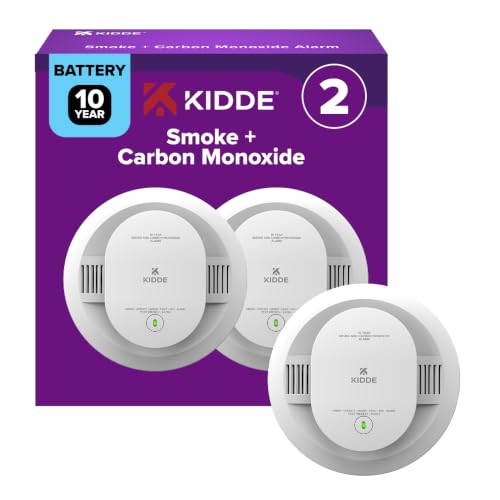
- Built-in 10-year battery
- Smoke and CO detection together
- Designed to reduce false alarms
Best For: Buyers wanting low-maintenance coverage in two locations
Best Sealed-Battery Value – X-Sense SC06 5-Pack
The X-Sense SC06 is a practical five-pack for covering multiple rooms with smoke detectors with carbon monoxide sensors. Its photoelectric smoke sensor and electrochemical CO sensor provide two-in-one protection, while the sealed lithium battery is designed to last 10 years.
Best For: Households that need several easy-to-install standalone alarms with long-term battery life.
Pros:
- Includes five combination smoke and CO alarms.
- 10-year built-in lithium battery avoids routine battery changes.
- Photoelectric and electrochemical sensors help detect smoke and carbon monoxide.
- Tested to UL 217 and UL 2034 standards.
Cons:
- Does not support wireless interconnection, Wi-Fi, or a base station.
- Standalone design cannot make all alarms sound together.
Choose this pack when broad coverage and low maintenance matter more than connected features. For interconnected protection, look at a compatible wireless model instead.
Best Wireless Interconnection – X-Sense XP0H-WN 3-Pack
The X-Sense XP0H-WN is a three-pack of smoke detectors with carbon monoxide sensors that wirelessly interconnect. When one alarm detects smoke or CO, all connected alarms sound, giving occupants a simultaneous warning throughout the home.
Best For: Multi-room homes where coordinated alerts are more important than Wi-Fi or app connectivity.
Pros:
- Wireless interconnection makes all alarms sound together.
- 10-year sealed lithium batteries reduce maintenance.
- Combines photoelectric smoke and electrochemical CO detection.
- Large mounting brackets can cover old screw holes and ceiling marks.
Cons:
- Supports wireless interconnection but not Wi-Fi or base station connection.
- The 5.7-inch mounting bracket may not suit every existing installation.
This is the stronger choice for homes that need linked alarms without rewiring. Confirm the bracket size and remember that wireless interconnection is not the same as smart-home connectivity.
Best Simple Battery Option – First Alert SMICO100
The First Alert SMICO100 is a straightforward battery-powered combination alarm for shoppers seeking smoke detectors with carbon monoxide sensors in one unit. Its Precision Detection sensing is designed to reduce cooking nuisance alarms, and the alarm includes test, silence, and end-of-life notifications.
Best For: Buyers who want a familiar, easy-to-install single alarm with basic testing and maintenance features.
Pros:
- Provides smoke and carbon monoxide protection in one device.
- Battery operation simplifies installation without hardwiring.
- Test/silence button supports routine checks.
- End-of-life warning indicates when replacement is needed.
Cons:
- Sold as a single alarm rather than a multi-pack.
- Supplied details list an ionization sensor rather than separate photoelectric and electrochemical sensors.
This model fits basic installations where simple controls and maintenance reminders are useful. Check the manufacture date shown on the product when evaluating its remaining service life.
Best for On-Unit Status Checks – X-Sense SC01
The X-Sense SC01 combines smoke and carbon monoxide detection with a real-time CO and battery LCD display. It is a standalone alarm with a 10-year sealed battery, an 85 dB audible alarm, and mounting hardware for wall or ceiling installation.
Best For: Shoppers who want a single long-life alarm with visible CO and battery information.
Pros:
- LCD display shows real-time CO and battery information.
- 10-year sealed lithium battery requires no regular battery swaps.
- Photoelectric and electrochemical sensors provide combination detection.
- 85 dB alarm and included mounting hardware support practical installation.
Cons:
- Standalone unit does not support wireless interconnection, Wi-Fi, or a base station.
- One-pack format may require purchasing additional units for whole-home coverage.
The SC01 is a useful fit when visible status information is a priority. Choose it for independent room coverage, but consider an interconnected model if alerts need to travel between rooms.
Best Hardwired Voice Alerts – First Alert Precision Detection Alarm
For shoppers comparing smoke detectors with carbon monoxide sensors, this First Alert combination alarm is a hardwired option with AA battery backup. Its voice and location alerts identify the hazard and its location, while Precision Detection technology is designed to reduce cooking nuisance alarms.
Best For: Homeowners who want hardwired protection, voice guidance, and interconnect capability.
Pros:
- Voice and location alerts explain the danger and where it is detected.
- Precision Detection technology is designed to reduce cooking nuisance alarms.
- Early-warning interconnect can make compatible alarms sound together.
- AA battery backup maintains protection during power outages.
Cons:
- Requires a hardwired electrical connection.
- Compatibility should be checked before connecting it to existing alarms.
This is a practical pick for replacing or upgrading a hardwired alarm system, particularly when spoken hazard and location information would be useful during an emergency.
Best Standalone 10-Year Option – X-Sense SC07 Smoke and CO Alarm
The X-Sense SC07 is a standalone choice among smoke detectors with carbon monoxide sensors. Its sealed 10-year lithium battery eliminates routine battery changes, while separate photoelectric smoke and electrochemical CO sensors support detection of both hazards.
Best For: Buyers seeking simple, no-rewiring installation and long-term standalone protection.
Pros:
- Built-in sealed lithium battery is designed to last 10 years.
- Photoelectric and electrochemical sensors detect smoke and carbon monoxide.
- Mounts on a wall or ceiling with the included hardware.
- Tested and certified to meet UL 217 and UL 2034 standards.
Cons:
- Does not support wireless interconnection, Wi-Fi, or base-station connection.
- As a standalone unit, it will not make other alarms sound together.
Choose this model when straightforward installation and minimal maintenance matter more than connected features. Buyers needing wireless interconnection should look at the SC07-W version instead.
Best Hardwired Whole-Home Upgrade – Kidde 30CUA10-V Alarm
This Kidde model combines hardwired power with a built-in 10-year battery backup, making it a strong option among smoke detectors with carbon monoxide sensors. Voice alerts identify either fire or carbon monoxide, and interconnect capability can alert occupants throughout the home.
Best For: Homeowners, property managers, and contractors prioritizing hardwired, interconnected protection with long-term backup power.
Pros:
- Detects smoke and carbon monoxide with photoelectric and electrochemical sensors.
- Voice messages distinguish between “Fire” and “Warning, Carbon Monoxide.”
- 120V AC power is supported by a built-in 10-year battery backup.
- Can connect with other compatible Kidde interconnectable alarms.
Cons:
- Hardwired installation may require existing wiring or professional assistance.
- Interconnect benefits depend on using compatible Kidde alarms.
With an 85-decibel alarm, red LED indicator, voice messaging, and a 10-year limited warranty, this model suits installations where clear alerts and coordinated whole-home warning are priorities.
Long-Term Certified Protection – Heiman 10-Year Smoke & CO Combo
The Heiman combo is a practical choice for shoppers seeking smoke detectors with carbon monoxide sensors and minimal maintenance. Its sealed 10-year lithium battery, dual-function monitoring, visual and audible alerts, and stated UL and CSFM approvals make it suited to many residential and light commercial spaces.
Best For: Homeowners, landlords, contractors, and property managers who want a sealed-battery combination alarm.
Pros:
- Combines smoke and carbon monoxide detection in one unit.
- Sealed 10-year battery avoids routine battery replacement and hardwiring.
- Includes an 85dB alarm, flashing LED, alarm memory, test/silence button, and end-of-life warnings.
- Designed for ceiling or wall mounting with included hardware.
Cons:
- The supplied notes do not specify whether the battery is replaceable before the unit reaches its end of life.
- Its feature set may be more than needed for shoppers seeking a basic alarm.
Choose this model if long-term, low-maintenance coverage is the priority. Its diagnostics and memory alert add useful status information, while the stated certifications provide additional reassurance when selecting alarms for homes or managed properties.
Flexible Multi-Room Coverage – Kidde 30CUDR AA-Battery 3-Pack
This Kidde three-pack is a useful option for shoppers comparing smoke detectors with carbon monoxide sensors for several rooms. Each 30CUDR uses two included AA batteries, photoelectric and electrochemical sensors, an 85dB alarm, and sensing technology designed to help reduce cooking- and steam-related false alarms.
Best For: Homeowners and apartment residents who need three easy-install combination alarms with replaceable batteries.
Pros:
- Three alarms provide coverage for multiple rooms.
- Uses included AA batteries for no-wiring installation.
- Combines photoelectric smoke sensing with electrochemical CO sensing.
- Includes red LED status lighting, an 85dB alarm, mounting hardware, and a 10-year limited warranty.
Cons:
- Requires periodic AA battery replacement.
- Does not provide the sealed 10-year battery operation offered by the other Kidde model here.
The 30CUDR makes sense when room-by-room coverage and straightforward installation matter more than avoiding battery changes. Its three-pack format can simplify outfitting a home or apartment, while the false-alarm reduction features address common kitchen and bathroom nuisances.
Set-and-Forget Convenience – Kidde 30CUD10 10-Year 2-Pack
The Kidde 30CUD10 is designed for buyers who want smoke detectors with carbon monoxide sensors without recurring battery changes. This two-pack combines photoelectric smoke and electrochemical CO sensing with a built-in 10-year battery, red LED notification, and technology intended to help reduce false alarms from cooking or steam.
Best For: Homeowners, landlords, and contractors prioritizing long-term, low-maintenance coverage in two locations.
Pros:
- Built-in 10-year battery eliminates routine replacements and low-battery chirps.
- Two-in-one smoke and carbon monoxide detection in each alarm.
- Claims over 25% faster smoke detection and includes red LED status notification.
- Tested to UL 217 10th Edition, UL 2034 5th Edition, and FCC standards.
Cons:
- The sealed battery is not presented as user-replaceable.
- Two alarms may provide less coverage than a three-pack for larger homes.
This is the strongest fit for buyers who prefer to install alarms and avoid battery maintenance for a decade. The two-pack works well for targeted placement, while the stated standards and reduced-false-alarm design support everyday residential use.
How We Picked the Best Smoke Detectors with Carbon Monoxide Sensors
We focused on combination alarms that detect both smoke and carbon monoxide, then compared the features most relevant to everyday home safety. Our selection includes battery-powered, hardwired, wireless, sealed-battery, and multi-pack models to suit apartments, single-family homes, and larger properties.
We also considered alarm type, power reliability, alert clarity, installation requirements, maintenance demands, coverage value, and useful extras such as voice announcements, LED indicators, and backup batteries. A combination alarm is only effective when it is installed correctly and tested regularly, so we prioritized practical designs that are easier to maintain.
Quick Comparison
- Best for multiple rooms: Multi-packs provide a more economical way to cover bedrooms, hallways, and living areas.
- Best for existing wiring: Hardwired models can provide a clean installation and may support interconnected alarms, with battery backup for outages.
- Best for lower maintenance: Sealed 10-year battery models reduce battery-change reminders and are useful for rentals or hard-to-reach locations.
- Best for clearer alerts: Voice-alert models can identify whether the threat is smoke or carbon monoxide.
- Best for flexible placement: Standard battery-powered alarms are generally easier to install where wiring is unavailable.
Key Buying Factors for Smoke Detectors with Carbon Monoxide Sensors
Power and Installation
Choose a battery model if you need quick, flexible installation. Hardwired alarms are better suited to homes with compatible existing wiring, but confirm connector and installation requirements before buying. Battery backup is especially important for hardwired units because power outages can occur during storms or other emergencies.
Battery Lifespan and Maintenance
Replaceable batteries make it easy to restore power, but they require regular monitoring. Sealed 10-year batteries can reduce maintenance, though the entire alarm typically needs replacement when the battery reaches the end of its service life. Test every alarm routinely and keep vents free of dust.
Alert and Coverage Features
Voice alerts, loud sirens, visual indicators, and wireless interconnection can make alarms easier to understand and hear throughout the home. Check the product’s installation guidance and local safety requirements for recommended placement, especially near sleeping areas and on each level.
Who Should Buy Which Smoke Detectors with Carbon Monoxide Sensors?
Choose a multi-pack if you need to equip several rooms or replace multiple aging alarms at once. Renters and apartment residents will usually prefer battery-powered units that install without electrical work. Homeowners with existing alarm wiring may benefit from hardwired models with battery backup and, where supported, interconnected alerts.
If you want fewer battery changes, select a sealed 10-year model. If household members may have difficulty distinguishing alarm sounds, a voice-alert model can provide more useful information during an emergency. Whatever you choose, install enough alarms for your home’s layout, follow the manufacturer’s instructions, and never disable an alarm because of nuisance alerts without addressing the cause.