Choosing a whole house energy recovery ventilator can make indoor air feel fresher without wasting as much heated or cooled air. The right system helps manage humidity, filtration, and ventilation year-round.
Below, we’ve narrowed the field to 10 strong options for different home sizes, climates, and control preferences so you can compare them with confidence.
Best 10 Whole House Energy Recovery Ventilator Picks for 2026
Whole-House Comfort Pick
Aprilaire V22BEC 120 CFM ERV for Larger Homes

- 120 CFM balanced ventilation for homes up to 6,000 sq. ft.
- Energy recovery core tempers incoming air to support comfort.
- Wall, ceiling, or floor mounting adds installation flexibility.
Best For: Larger homes needing simple whole-house ventilation
Smart Ductless Choice
VENTS-US Micra 100 WiFi HRV Kit

- Wi-Fi control for timers, schedules, and boost modes.
- Built-in MERV8 and MERV14 filters add filtration.
- Up to 98% heat recovery helps limit energy loss.
Best For: Room-by-room balanced ventilation with smart controls
Compact Efficiency Pick
VHR Ss 70 CFM Heat Recovery Ventilator

- Energy Star rated for efficiency-focused use.
- 70 CFM output with 3 speeds.
- WinterGuard recirculation defrost supports cold climates.
Best For: Smaller ventilation projects needing winter protection
Premium Flexible Pick
Panasonic Intelli-Balance Elite Plus+ 120 CFM ERV

- 30-120 CFM airflow supports balanced, positive, or negative pressure.
- Dual MERV 13 filters and hygroscopic core aid air handling.
- Ceiling, wall, or floor mounting with plug-in or hardwired options.
Best For: Buyers wanting flexible installation and stronger filtration
Compact Wall-Mounted HRV
Smart Ceramic Heat Recovery Ventilator
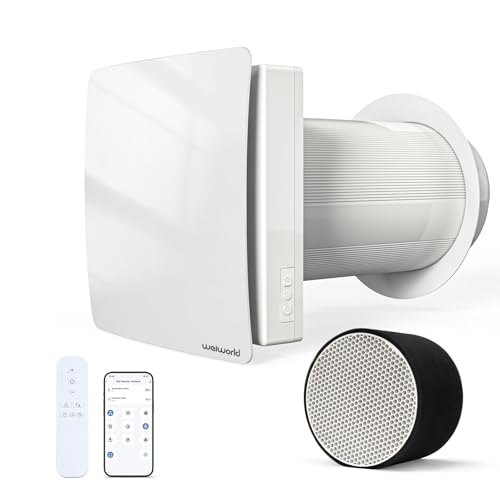
- Up to 90% heat recovery from exhaust air
- WiFi, remote, and app-based control
- Quiet 8.5W EC motor with three modes
Best For: single-room ventilation in small spaces
Balanced Attic ERV System
6-Inch Energy Recovery Ventilator

- Balanced air exchange with heat retention
- Adjustable airflow from 40 to 100 CFM
- Washable filters plus humidity sensor
Best For: attic ERV setups with simple controls
Whole-Home High-Airflow ERV

- Up to 213 CFM for whole-house airflow
- Enthalpic core with electronic defrost protection
- Dual washable MERV 6 filters included
Best For: larger homes needing continuous ventilation
Compact Attic ERV
Awoco 6” Vent ERV System, 100 CFM
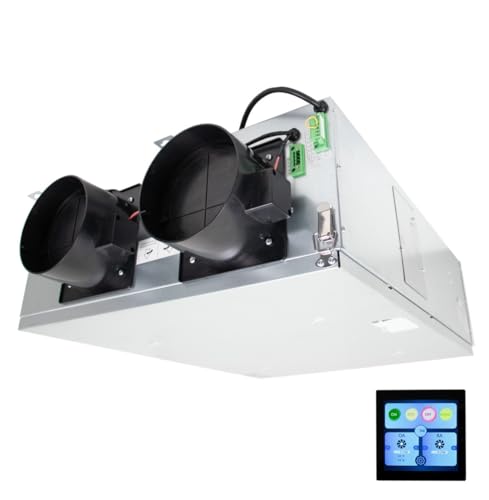
- 40-100 CFM adjustable airflow
- Touch-screen control panel included
- Washable filter and humidity sensor
Best For: Compact attic installations needing balanced ventilation
Cold-Climate ERV
VENTS-US Frigate ERV 120s, 162 CFM

- Up to 162 CFM airflow
- Anti-frost protection for freezing weather
- Washable MERV 6 filters
Best For: Cold-climate whole-home ventilation with higher airflow
High-Capacity All-Climate ERV
ACiQ Energy Recovery Ventilator, 150 CFM

- 150 CFM whole-home airflow
- Plug-in or hardwired install
- Automatic exhaust defrost
Best For: Higher-capacity homes needing flexible all-climate ventilation
Whole-House Comfort Pick – Aprilaire V22BEC 120 CFM ERV for Larger Homes
If you’re comparing a whole house energy recovery ventilator for broad-home ventilation, the Aprilaire V22BEC is built to move fresh air through spaces up to 6,000 sq. ft. while tempering incoming air with energy recovered from exhaust air. That makes it a practical option when you want balanced ventilation without giving up as much conditioned air to the outdoors.
Best For: Larger homes that need whole-house fresh air ventilation with simple controls and flexible mounting.
Pros:
- 120 CFM capacity suits whole-house ventilation needs in homes up to 6,000 sq. ft.
- Energy recovery core helps temper incoming air and may reduce HVAC load.
- Balanced air exchange preserves indoor temperature and humidity better than basic exhaust-only ventilation.
- Push-button controls make airflow, supply, and exhaust settings straightforward to manage.
Cons:
- At 53 dB, it may not be the quietest choice in noise-sensitive areas.
- It is a larger, heavier unit at 50 pounds, so installation planning matters.
Overall, this Aprilaire model is a strong fit if your priority is dependable whole-home ventilation with broad installation flexibility. It focuses on comfort, balanced exchange, and easy operation rather than smart-app extras.
Smart Ductless Choice – VENTS-US Micra 100 WiFi HRV Kit
The VENTS-US Micra 100 is a ductless whole house energy recovery ventilator alternative for rooms or compact spaces where wall mounting and app control are priorities. It uses built-in MERV filtration and claims high heat recovery efficiency, so it’s aimed at delivering fresh, filtered air while limiting energy loss.
Best For: Bedrooms, home offices, nurseries, and other spaces where smart control and filtration matter.
Pros:
- Wi-Fi control lets you adjust timers, standby, booster, and schedules from a phone or tablet.
- Built-in MERV8 and MERV14 filters help provide filtration right in the unit.
- Up to 98% heat recovery is designed to reduce heating or cooling loss.
- Wall-mount kit and installation template are included for easier setup.
Cons:
- 59 CFM airflow is more modest than larger whole-house units.
- It requires a wall-mount installation, so it may not suit every layout.
This model stands out for buyers who want a compact, smart-controlled ventilation solution with filtration built in. It is more of a room-focused balanced ventilation option than a high-capacity whole-home system.
Compact Efficiency Pick – VHR Ss 70 CFM Heat Recovery Ventilator
VHR Ss Heat Recovery Ventilator w/ WinterGuard Recirculation Defrost, 5" Top Ports, 70 CFM
Check Price On AmazonIf you need a whole house energy recovery ventilator with a simpler specification set, the VHR Ss Heat Recovery Ventilator focuses on steady airflow, energy efficiency, and winter defrost support. Its 70 CFM rating and three speeds make it a practical fit for smaller ventilation demands or supplementary fresh-air exchange.
Best For: Smaller homes or projects that want an energy-star-rated heat recovery ventilator with winter protection.
Pros:
- Energy Star rated for efficiency-minded installations.
- 70 CFM airflow and 3 speeds provide basic ventilation flexibility.
- WinterGuard recirculation defrost is useful for cold-weather operation.
- 5-inch top ports may suit compact duct layouts.
Cons:
- Lower airflow than 120 CFM units limits use in larger homes.
- Supplied details are sparse, so buyers may need to verify fit and features before purchasing.
In practical terms, this is the straightforward pick for shoppers who value efficiency and cold-weather functionality over advanced controls or high capacity. It looks best suited to smaller-scale balanced ventilation needs.
Premium Flexible Pick – Panasonic Intelli-Balance Elite Plus+ 120 CFM ERV
The Panasonic Intelli-Balance Elite Plus+ is a feature-rich whole house energy recovery ventilator designed for buyers who want flexible airflow control, filtration, and adaptable installation. With a 30 to 120 CFM range and SmartFlow ECM motors, it aims to maintain balanced ventilation quietly even when static pressure changes.
Best For: Installations that need adjustable airflow, strong filtration, and mount-anywhere flexibility.
Pros:
- 30-120 CFM adjustable airflow supports balanced, positive, or negative pressure setups.
- SmartFlow ECM motors automatically adjust speed to maintain airflow and quieter operation.
- Dual MERV 13 filters provide higher-level filtration on both air streams.
- Ceiling, wall, or floor mounting and plug-in or hardwired options add versatility.
Cons:
- Feature set may be more than needed for buyers who only want basic ventilation.
- Wi-Fi module and some controls are optional, not necessarily included.
This Panasonic model is the most configurable option here, making it a strong candidate when you want a balanced ventilation system that can adapt to different home layouts and control preferences. It prioritizes performance flexibility and filtration depth.
Compact Wall-Mounted HRV – Smart Ceramic Heat Recovery Ventilator
If you need a whole house energy recovery ventilator alternative for a single room, this wall-mounted HRV is built to bring in fresh air while recovering up to 90% of heat from exhaust air. It uses a ceramic heat exchanger, an EC motor, and three airflow modes to help balance ventilation and energy use in spaces like attics, garages, apartments, sheds, and tiny homes.
Best For: Single-room ventilation where quiet operation, app control, and simple wall mounting matter.
Pros:
- Recovers up to 90% of heat energy with a ceramic heat exchanger
- WiFi and remote control via Tuya app or included remote
- Three modes: fresh air, exhaust, and recirculation
- Low-power 8.5W EC motor with under-30dB operation
Cons:
- Designed for one room rather than a true whole-house system
- 60 cubic meter per hour airflow is modest for larger homes
- Requires wall installation and duct fitment
This is a practical pick if you want energy recovery ventilation in a compact format with smart controls and easy maintenance. It makes the most sense where low noise and flexible installation are more important than high-capacity whole-home coverage.
Balanced Attic ERV System – 6-Inch Energy Recovery Ventilator
This Awoco energy recovery ventilator is aimed at balanced attic or utility ventilation, helping exchange stale indoor air for fresh outdoor air while retaining heat and managing moisture. With dual EC motors, adjustable airflow, washable filters, and built-in humidity control, it fits buyers who want a straightforward ERV system with practical setup features.
Best For: Attic installations and controlled air exchange where adjustable airflow and humidity management are priorities.
Pros:
- Balanced ERV design helps retain heat and optimize moisture content
- Adjustable outside-air and return-air airflow from 40 to 100 CFM
- Washable 20 PPI filter and built-in humidity sensor
- Built-in dampers for defrost and recirculation cycling
Cons:
- Made for attic mounting rather than broad whole-house coverage
- Controls are knob-based instead of smart or remote operated
- 50 dB operation may be noticeable in quieter areas
Overall, this is a solid fit if you want an energy-saving ERV with balanced airflow and simple mechanical controls. Its certified design and included installation hardware make it appealing for buyers focused on function over extras.
Whole-Home High-Airflow ERV – 213 CFM Ventilation Fan
For shoppers comparing a whole house energy recovery ventilator, the VENTS-US BRIG ERV 200 stands out with true whole-home airflow and balanced fresh-air exchange. It delivers up to 213 CFM, uses an enthalpic recovery core, includes electronic defrost protection, and adds washable MERV 6 filtration for both supply and exhaust air streams.
Best For: Whole-house ventilation in larger homes, renovated spaces, or new construction that need strong continuous airflow.
Pros:
- Up to 213 CFM airflow for whole-home ventilation
- Enthalpic recovery core helps recover energy from outgoing air
- Electronic defrost protection supports cold-weather operation
- Dual washable MERV 6 filters help protect both air streams
Cons:
- Requires ceiling-mounted built-in installation
- 212W power draw is higher than compact ERV units
- Controls are limited to built-in step settings unless expanded externally
This is the strongest match here for buyers who want a genuinely whole-house ERV with higher airflow and built-in protections. It is best suited to projects where capacity, filtration, and continuous operation matter more than compact size.
Compact Attic ERV – Awoco 6” Vent ERV System, 100 CFM
If you’re comparing a whole house energy recovery ventilator for a smaller or tighter install, this Awoco unit focuses on balanced airflow, humidity support, and straightforward attic mounting. It exchanges stale indoor air for fresh outdoor air while helping retain heat and manage moisture, and the included touch-screen control panel makes operation easier to tune.
Best For: Homeowners who want a compact attic-mounted ERV with built-in controls and variable airflow.
Pros:
- Variable airflow from 40 CFM to 100 CFM on both OA and RA sides
- Includes washable 20 PPI filter and control panel
- Built-in humidity sensor, dampers, and timer knob for added control
- HVI, ETL, and cETL certified with a 1-year limited warranty
Cons:
- Requires 6-inch insulated ducting for exhaust and outside air
- Maximum airflow is lower than larger whole-house ERV options
- Designed for attic installation, so placement flexibility is limited
Overall, this Awoco ERV is best when you want a compact, energy-saving ventilation system with user-friendly controls and modest airflow. It suits homes that need balanced fresh-air exchange without stepping up to a larger-capacity unit.
Cold-Climate ERV – VENTS-US Frigate ERV 120s, 162 CFM
This whole house energy recovery ventilator is built for continuous ventilation with a focus on cold-weather reliability. The VENTS-US Frigate ERV 120s uses an enthalpy core to transfer heat and moisture, includes freeze protection, and supports balanced fresh-air supply and stale-air exhaust for whole-home use.
Best For: Homes in colder climates that want higher airflow and simple three-speed operation.
Pros:
- Up to 162 CFM of net airflow for whole-house ventilation
- Electronic anti-frost protection helps in freezing conditions
- Enthalpy core transfers both heat and moisture for comfort balance
- Washable MERV 6 filters and corrosion-resistant steel casing
Cons:
- Uses a built-in three-key switch rather than more advanced controls
- Ceiling/bracket mounting may require a more involved install
- Standard 5-inch duct connection may not match every existing setup
For buyers who want a durable ERV with strong airflow and cold-climate protection, this model stands out. It offers practical, low-maintenance whole-house ventilation with straightforward controls and efficiency-minded operation.
High-Capacity All-Climate ERV – ACiQ Energy Recovery Ventilator, 150 CFM
ACiQ Energy Recovery Ventilator ERV 150 CFM, Any Climate | Low & High-Speed Ventilation System
Check Price On AmazonIf you need a whole house energy recovery ventilator with enough capacity for broader home ventilation, the ACiQ ERV 150 CFM is built around continuous fresh-air exchange and heat-and-moisture recovery. It uses EC motors, supports plug-in or hardwired installation, and adds automatic exhaust defrost for year-round operation.
Best For: Homes that need a 150 CFM ERV with flexible installation and all-climate performance.
Pros:
- 150 CFM airflow for whole-home ventilation support
- EC motors and heat/moisture transfer for efficient operation
- Plug-in or hardwired installation options
- Automatic exhaust defrost helps in varying weather conditions
Cons:
- 120-watt power draw is higher than some lower-capacity models
- Button control is simpler than touchscreen systems
- At 50 pounds, it is not the lightest unit to handle
This ACiQ model is a strong pick when you want a higher-capacity ERV that still focuses on efficient year-round ventilation. It balances flexibility, all-climate features, and straightforward operation for homes that need more airflow than compact units provide.
How We Picked These Whole House Energy Recovery Ventilator Options
We focused on airflow capacity, climate suitability, filtration, frost or defrost protection, control features, and overall installation flexibility. We also favored models that fit real-world home needs, from smaller ductless setups to higher-capacity whole-home systems.
Quick Comparison
Capacity ranges from compact 70 CFM units to 200 CFM models, so the right choice depends on home size and ventilation demand. Smart controls, MERV filtration, and freeze protection are useful upgrades, while ductless or wall-mounted designs may suit retrofit projects better.
Key Buying Factors for a Whole House Energy Recovery Ventilator
Airflow and Home Size
Match the ventilator’s CFM rating to your square footage and occupancy. Undersizing can leave stale air in the home, while oversizing may increase noise and energy use.
Energy Recovery Vs. Heat Recovery
A Whole House Energy Recovery Ventilator transfers moisture as well as temperature, which can be especially helpful in humid or extreme climates. HRVs are often a better fit for colder regions where moisture control matters less than heat retention.
Filtration and Indoor Air Quality
Look for MERV-rated filtration if allergies, dust, or outdoor pollutants are a concern. Better filtration can improve comfort, but it may require more maintenance and periodic filter changes.
Controls, Defrost, and Installation Style
WiFi control, variable speeds, and balanced airflow settings make the system easier to tune. If you live in a cold climate, freeze or defrost protection is important. Also consider whether you need a ducted whole-house unit or a wall-mounted, ductless solution for a renovation or smaller space.
Who Should Buy Which Whole House Energy Recovery Ventilator?
Large homes and buyers wanting broader coverage should look at higher-capacity ERVs in the 120 to 200 CFM range. Homes in colder climates may prefer HRVs with strong defrost protection, while humid regions often benefit more from an ERV. If you want easier monitoring and day-to-day convenience, prioritize smart controls and adjustable fan speeds. For retrofit projects, compact or ductless models can be the most practical path to better ventilation.